Las Vegas has one of the highest concentrations of tattoo shops per capita in the country, ranging from tourist-facing walk-in shops on the Strip to appointment-only studios in the Arts District. With that much variety, “professional” is not a marketing word—it is a specific, checkable set of practices. Knowing what actually separates a professional studio from a shop that simply looks the part can save you from a painful, expensive, or even dangerous experience.
This guide breaks down the concrete markers of a professional tattoo studio: licensing, sterilization, artist credentials, consultation practices, and the day-to-day habits that separate serious studios from the rest.
1. Proper Licensing and Permits
In Nevada, tattoo establishments and the artists who work in them are regulated at the county and state level. A professional studio will hold a current body art establishment permit issued by its local health authority (in Clark County, that is the Southern Nevada Health District), and individual artists typically carry their own registration or certification on file.
- Permits should be visible. Reputable studios post their health permit somewhere a client can see it, usually near the front counter or consultation area.
- Permits are studio-specific. A license from one location does not automatically cover a different address, so a studio that recently moved should be able to show updated paperwork.
- You are allowed to ask. Asking “are you licensed with the health district?” is a completely normal question, not an insult. A professional shop will answer without hesitation.
2. Sterilization and Single-Use Equipment as Standard Practice, Not a Selling Point
Every professional studio in the United States is expected to follow bloodborne pathogen exposure control standards set by the Occupational Safety and Health Administration (OSHA), in addition to state and local health codes. In practice, that means:
- Needles and tubes are single-use. Needle cartridges should come out of a sealed, sterile package in front of you, and be disposed of in a sharps container immediately after your session—never reused, even on the same client at a later date.
- Non-disposable equipment is autoclaved. Reusable metal components (grips, some tube systems) are cleaned and then sterilized in an autoclave, and professional studios periodically run spore tests to confirm the autoclave is actually reaching sterilization temperature, not just running a cycle.
- Surfaces are barrier-protected. Machine cords, spray bottles, arm rests, and trays are wrapped in disposable plastic barrier film that gets changed between every single client.
- Gloves change constantly. A professional artist changes gloves any time they touch something outside the immediate work area—a phone, a doorknob, a stencil—and washes hands between clients, not just once per shift.
None of this should feel like a special showcase. If a studio is proud to point out that it sterilizes its equipment, that is a good sign, but the deeper test is whether these habits are simply routine and unremarked-upon, happening the same way for the tenth client of the day as for the first. For a closer look at how these routines fit into a normal business day, see Inside a Day at a Las Vegas Tattoo Studio.
3. Artists Who Specialize Rather Than Claim to Do Everything
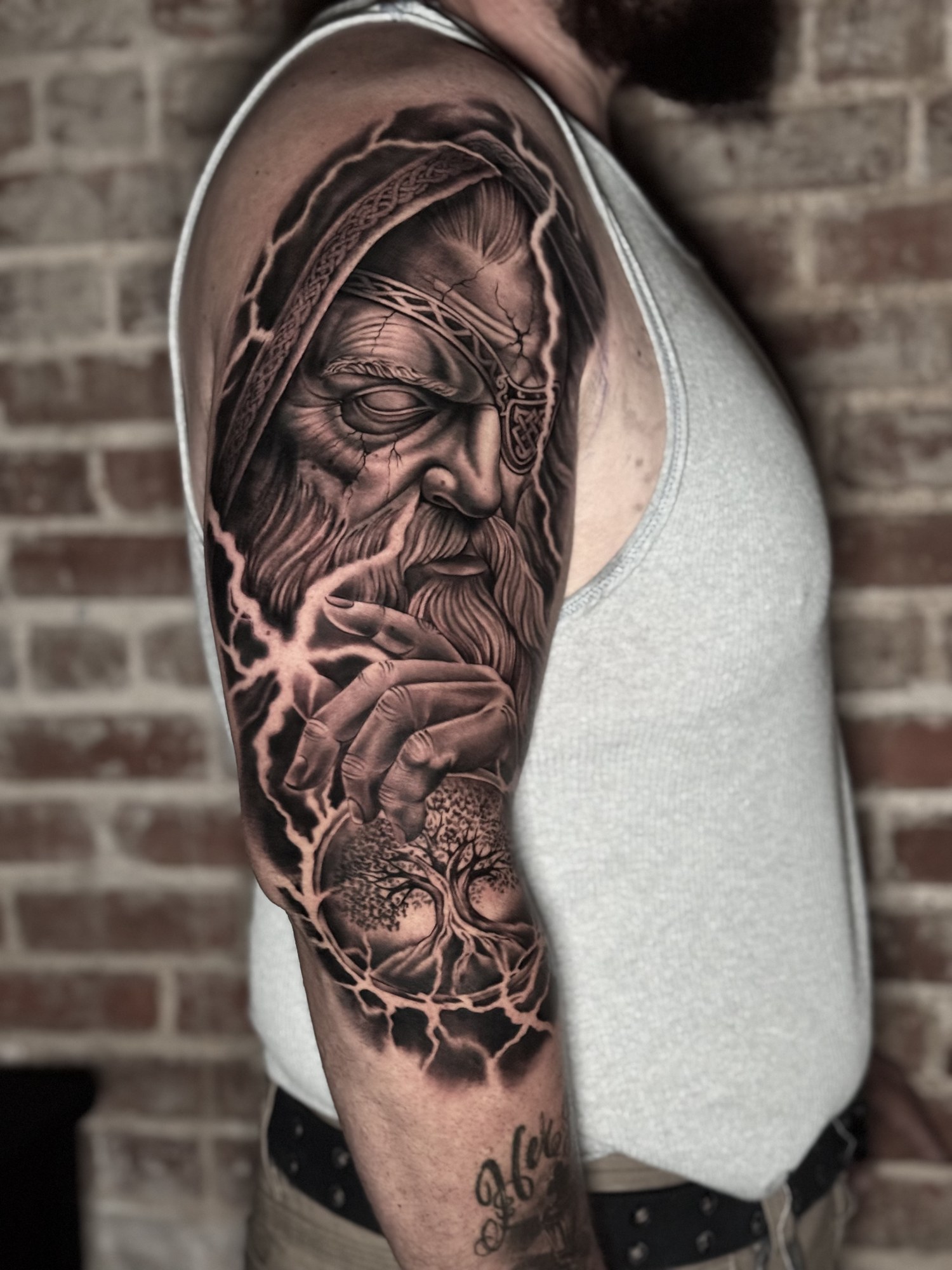
Tattooing has distinct disciplines—fine line, black and grey realism, traditional American, Japanese irezumi, script and lettering, color saturation work—and each requires different needle groupings, machine settings, and years of focused practice. A professional studio structures its artist roster around specialization rather than presenting every artist as equally capable of any style.
When you research a studio, look at each individual artist’s portfolio, not just the shop’s general Instagram feed. A studio is not automatically the right fit for your specific design just because it is well-known; the specific artist assigned to you is what matters.
4. A Real Consultation Process
Professional studios treat custom tattoos as a design process, not a same-day transaction. That typically includes:
- A dedicated consultation (in person, by phone, or by detailed messaging) before the appointment, where placement, sizing, and reference material are discussed.
- Honest feedback if an idea will not translate well—for example, warning that very fine detail will blur over time, or that a design needs to be resized to fit the body part well.
- A clear, written or verbal explanation of pricing structure (hourly rate, shop minimum, or flat rate for the piece) before the needle touches skin.
- A deposit policy that is explained upfront, not discovered after the fact.
5. Informed Consent, Not Just a Signature
Every reputable studio requires a signed consent form before tattooing, but a professional studio treats that form as documentation of a conversation, not a formality to rush through. That conversation should cover:
- Basic health screening (skin conditions, allergies, blood thinners, pregnancy status, and similar contraindications).
- Age verification—professional studios do not tattoo minors without the specific, narrow exceptions allowed under Nevada law, and they check ID rather than taking a client’s word for it.
- A clear explanation of the healing process and aftercare expectations before you leave the chair.
6. Clean, Purpose-Built Workspaces
Walk around a professional studio and you will typically notice private or semi-private tattoo stations, adequate lighting for detailed work, a visibly separate sterilization area away from where clients sit, and a general absence of clutter. This is not about aesthetics for their own sake—a cluttered station makes it harder to maintain a clean field during a long session, and a shop’s physical layout is a reasonable proxy for how seriously it treats its other standards.
7. Aftercare Instructions That Go Beyond a Handout
A professional studio does not just hand you a printed aftercare sheet and send you out the door. Expect the artist to walk you through the specific aftercare protocol they recommend (bandage type, when to first wash, what products to avoid), answer questions about your specific tattoo’s healing timeline, and remain reachable if you have concerns about how the tattoo is healing in the days afterward.
8. Reasonable, Transparent Business Practices
Finally, professionalism shows up in ordinary business behavior: clear policies on deposits, rescheduling, and touch-ups; straightforward answers about pricing; and a willingness to say no to a design or a client relationship that is not a good fit, rather than taking on work that is likely to go poorly. A studio that is transparent about its limitations is, somewhat counterintuitively, one of the strongest signals of professionalism.
Red Flags Worth Taking Seriously
- Reused needles, or an artist who removes a needle from anything other than a freshly opened sterile package in front of you.
- No visible health permit, or evasiveness when asked about licensing.
- Pressure to skip the consultation and start immediately on a large or highly custom piece.
- No sharps container, or sharps disposed of in a regular trash can.
- An artist willing to tattoo someone who appears visibly intoxicated.
How Nevada’s Regulatory Framework Fits In
Nevada does not license tattoo artists at the state level the way it licenses, say, cosmetologists; regulation is handled primarily through county and local health authority body art permitting, layered on top of the same federal OSHA bloodborne pathogen requirements that apply to any workplace where employees may contact blood or other potentially infectious materials. In practice, this means the specific permitting body can vary depending on where in the Las Vegas Valley a studio operates, which is one more reason it is reasonable to ask a studio directly which health authority licenses it, rather than assuming a single statewide standard covers everything. (See our editorial standards for how we source safety and legal claims like these.)
Frequently Asked Questions
Does a clean-looking shop automatically mean it is following proper sanitation practice?
Not necessarily. A visually tidy shop is a reasonable positive sign, but the practices that actually prevent cross-contamination—single-use needles, autoclave sterilization with periodic spore testing, glove changes, sharps handling—are mostly things that happen out of view. Appearance and actual protocol are related but not the same thing, which is why it is worth asking directly rather than judging by décor alone.
Is it rude to ask a studio about its licensing or sterilization practices before booking?
No. Professional studios field these questions regularly and answer them without friction. Hesitation or defensiveness in response to a straightforward safety question is itself useful information.
Do all professional studios look the same?
No—professional studios range from small, appointment-only spaces to larger multi-artist shops that also handle heavy walk-in traffic. Size and atmosphere vary widely; the underlying licensing, sterilization, and consultation standards described above are what stay consistent across a genuinely professional operation.