Las Vegas may be on your mind late at night, but an idea, a studio inquiry and a confirmed tattoo appointment are three different things. A search result that mentions walk-ins or late hours does not tell you whether the artist you want is available, whether your proposed design fits the time, or whether the listed information is current.
A useful plan starts with those distinctions. Rather than assuming the whole city offers tattooing around the clock, ask the particular studio about your date and project. The answer may be a consultation, an appointment on another day, or a suggestion to develop the idea further.
Ask What Has Actually Been Confirmed
When you contact a studio, find out whether you are requesting information, submitting a design for review or reserving time with an artist. Those stages can look similar in a message thread but mean different things for your travel plans.
For one documented example, Seven Tattoo Studio’s appointment page describes a submission review followed, where appropriate, by a conversation about direction, placement and pricing before a booking. That is one studio’s process, not a rule for every shop or an endorsement. It illustrates why a submitted form should not be treated as a reserved session.
Confirm the Artist as Well as the Opening
A studio being open does not establish that a particular artist is taking new work at that moment. Ask who would handle your project and look at that person’s relevant portfolio. A small lettering idea, a large realism composition and a flash selection may follow different booking paths.
If the person you hoped to book is unavailable, take time to consider the alternatives. An open slot and a suitable artistic match are separate decisions. You can keep the idea and change the timing rather than treating the first available appointment as the only chance to make it happen.
Describe the Project Before Discussing the Clock
Send a short subject description, a likely placement and a size range. Explain whether you are interested in existing flash or a custom drawing. Ask what the artist needs before they can discuss the time required, and which parts of the process take place before the session.
A late arrival does not make a complex design simpler. If your plans leave little room for consultation or revisions, ask whether another appointment would give the work the attention you want. Our collection planning guide can help you consider the piece beyond the immediate trip.
Put the Practical Details in One Place
Keep the confirmed address, date, arrival time, artist’s name and contact method together. Check whether there are instructions about sending references, confirming the appointment or changing the booking. Ask the studio to explain deposits, price estimates and cancellation terms directly before you rely on an assumption.
Map the actual address rather than a landmark mentioned in promotional copy. Leave room in your itinerary for the conversation and the session instead of placing another fixed commitment immediately afterward. When plans change, contact the studio through its stated channel.
Use a Short Booking Checklist
- Is this a confirmed appointment or a request awaiting review?
- Which artist is considering the project?
- What design work happens before the appointment?
- What arrival time and address have been confirmed?
- What terms apply to the booking and to any changes?
- Who should you contact if travel disrupts the plan?
For more context about the working day, read Inside a Day at a Las Vegas Tattoo Studio. Treat planning guides as preparation for direct communication, not a substitute for the studio’s own current instructions.
Common Late-Booking Questions
Does a city guide guarantee a walk-in slot? No. Only the studio can confirm availability for the specific date and project.
Should I assume a message sent late at night will be answered immediately? No. Allow the studio to respond through its normal process before arranging travel around the inquiry.
What if my schedule is too tight? Ask about a consultation or another date. A clear plan can be more useful than trying to force a full project into an uncertain opening.
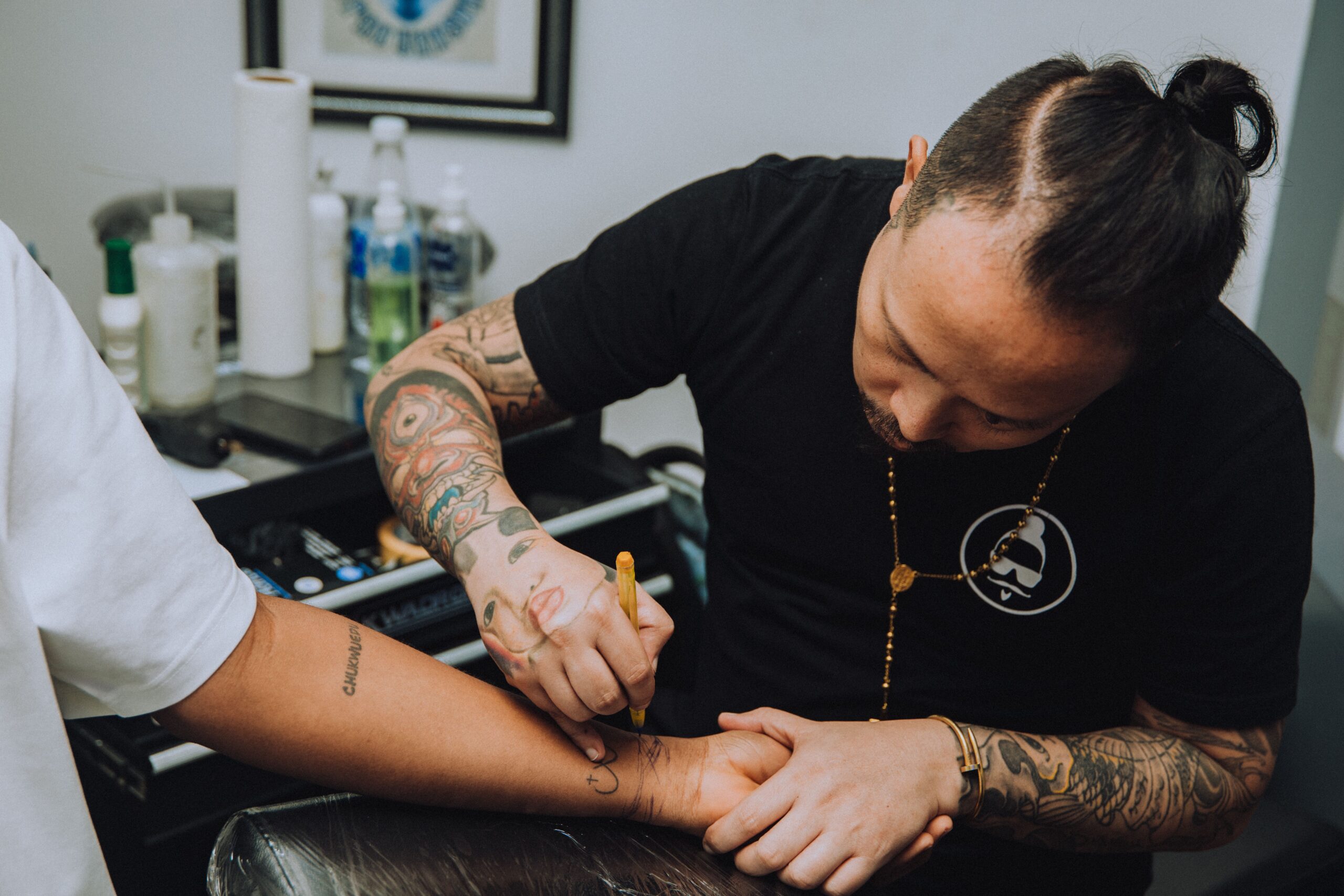
Representative licensed stock photograph of the tattoo design process, not a photograph of a named local artist or featured institution. Photograph: Omotayo Samuel / Pexels.