We all make mistakes. Perhaps you got a poorly executed tribal armband in the 90s, a spontaneous matching tattoo with an ex-partner during a wild Las Vegas weekend, or an amateur piece from a friend’s kitchen.
Fortunately, you aren’t stuck with it forever. Las Vegas is home to some of the best cover-up tattoo artists in the world. However, covering an old tattoo is significantly more complex than tattooing bare skin. It requires strategic design, a deep understanding of color theory, and an artist who specializes in camouflage.
Here is a complete breakdown of the tattoo cover-up process.
The Golden Rule: Ink Does Not Erase Ink
The most common misconception about cover-ups is that the artist can simply “paint over” the old tattoo with skin-colored ink or white ink, as if using whiteout on a piece of paper.
This is impossible.
Tattoo ink lives in the dermis layer of the skin. When you put new ink over old ink, they combine. If you put light pink ink over a heavy black tribal tattoo, the black will simply absorb the pink, and within weeks, the black will show right back through.
Therefore, a cover-up is not about erasing the old tattoo; it is about distracting the eye and camouflaging the old lines within a darker, busier design.
The Rules of Cover-Up Design
If you want a successful cover-up, you must be willing to compromise on your new design. You cannot cover a dense, black skull with a delicate, fine-line watercolor flower.
1. It Must Be Bigger
A successful cover-up generally needs to be at least two to three times larger than the original tattoo. The extra space allows the artist to draw the eye away from the covered area and integrate the old shape into a new, flowing composition.
2. It Must Be Darker
To effectively hide old pigment, the new pigment must be darker and more heavily saturated.
- The Best Colors for Cover-Ups: Deep blacks, dark blues, rich purples, and dark greens.
- The Worst Colors for Cover-Ups: Yellows, light pinks, pale blues, and white.
3. It Requires Texture and Detail
A flat sheet of color will not hide heavy black lines; the old lines will raise up and show through the flat color. A skilled cover-up artist uses texture to hide the old ink.
- Great Cover-Up Designs: Traditional panthers (heavy black), highly textured bio-mechanical designs, dark floral arrangements (using the leaves and shadows to hide the old ink), and Japanese koi fish or dragons (the scales hide lines perfectly).
The Process: Step-by-Step
Step 1: The In-Person Consultation
You cannot book a cover-up via email alone. You must visit the shop. The artist needs to see the old tattoo in person to assess how dark it is, how much scar tissue is present, and how the ink has spread.
Step 2: The Strategy
The artist will take a tracing or a high-resolution photo of your arm. They will then design the new piece so that the darkest, busiest parts of the new design (like the shadows of a rose or the black spots of a panther) perfectly align over the darkest parts of your old tattoo.
Step 3: The Execution
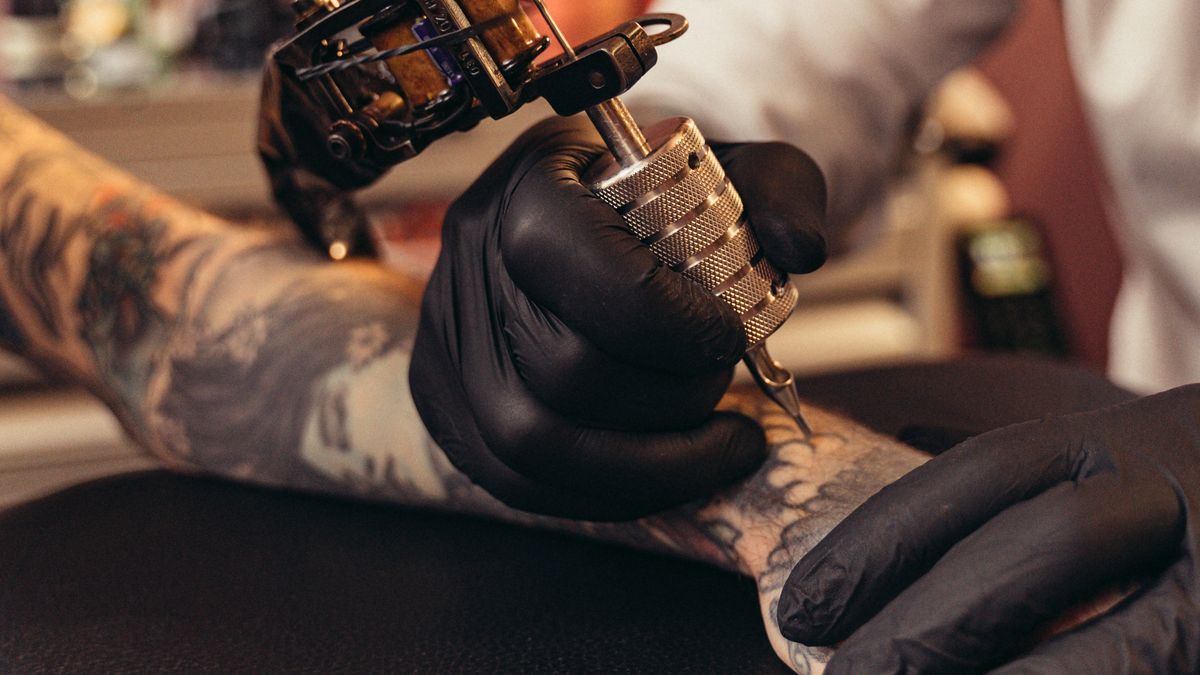
Cover-ups often take longer and hurt slightly more than a standard tattoo because the artist has to pack the ink very densely to ensure maximum saturation. They may also be tattooing over old scar tissue left behind by the previous artist.
Step 4: The Touch-Up
Once the cover-up heals, the old ink may occasionally “ghost” or peek through the new design slightly. This is normal. A second pass (touch-up session) is often required to pack in a final layer of black or color to completely kill the old design.
When is Laser Removal Necessary?
Sometimes, an old tattoo is simply too large, too dark, and too dense to cover successfully without turning half your body pitch black.
In these cases, a reputable artist will recommend laser fading.
You do not need to laser the tattoo completely off. Often, just two or three laser sessions are enough to lighten the heavy black lines to a pale grey. Once it is lightened, the artist has a much wider range of options for the cover-up design. Las Vegas has numerous medical spas and specialized laser clinics that work directly with tattoo artists for this exact purpose.
Conclusion
A successful cover-up is like a magic trick. When done correctly, no one will ever know the old tattoo was there. Be flexible with your design ideas, trust your artist’s knowledge of color theory, and be prepared to go bigger and darker to finally bury that old mistake.